Sunday, March 29, 2009

Is Facebook Growing Up Too Fast?

WHEN Facebook signed up its 100 millionth member last August, its employees spread out in two parks in Palo Alto, Calif., for a huge barbecue. Sometime this week, this five-year-old start-up, born in a dorm room at Harvard, expects to register its 200 millionth user.

That staggering growth rate — doubling in size in just eight months — suggests Facebook is rapidly becoming the Web’s dominant social ecosystem and an essential personal and business networking tool in much of the wired world.

Yet Facebook executives say they aren’t planning to observe their latest milestone in any significant way. It is, perhaps, a poor time to celebrate. The company that has given users new ways to connect and speak truth to power now often finds itself as the target of that formidable grass-roots firepower — most recently over controversial changes it made to users’ home pages.

As Facebook expands, it’s also struggling to match the momentum of hot new start-ups like Twitter, the micro-blogging service, while managing the expectations of young, tech-savvy early adopters, attracting mainstream moms and dads, and justifying its hype-carbonated valuation.

By any measure, Facebook’s growth is a great accomplishment. The crew of Mark Zuckerberg, the company’s 24-year-old co-founder and chief executive, is signing up nearly a million new members a day, and now more than 70 percent of the service’s members live overseas, in countries like Italy, the Czech Republic and Indonesia. Facebook’s ranks in those countries swelled last year after the company offered its site in their languages.

All of this mojo puts Facebook on a par with other groundbreaking — and wildly popular — Internet services like free e-mail, Google, the online calling network Skype and e-commerce sites like eBay. But Facebook promises to change how we communicate even more fundamentally, in part by digitally mapping and linking peripatetic people across space and time, allowing them to publicly share myriad and often very personal elements of their lives.

Unlike search engines, which ably track prominent Internet presences, Facebook reconnects regular folks with old friends and strengthens their bonds with new pals — even if the glue is nothing more than embarrassing old pictures or memories of their second-grade teacher.

Facebook can also help rebuild families. Karen Haber, a mother of two living outside Tel Aviv, logs onto Facebook each night after she puts the children to bed. She searches for her family’s various surnames, looking for relatives from the once-vast Bachenheimer clan of northern Germany, which fractured during the Holocaust and then dispersed around the globe.

Among the three dozen or so connections she has made on Facebook over the last year are a fifth cousin who is a clinical social worker in Woodstock, N.Y.; a fourth cousin running an eyeglasses store in Zurich; and another fifth cousin, living in Hong Kong selling diamonds. Now she shares memories, photographs and updates with them.

“I was never into genealogy and now suddenly I have this tool that helps me find the descendants of people that my grandparents knew, people who share the same truth I do,” Ms. Haber says. “I’m using Facebook and trying to unite this family.”

Facebook has also become a vehicle for broad-based activism — like the people who organized on the site last year and mobilized 12 million people to march in protests around the globe against practices of the FARC rebels in Colombia.

Discussing Facebook’s connective tissue, Mr. Zuckerberg recalls the story of Claus Drachmann, a schoolteacher in northern Denmark who became a Facebook friend of Anders Fogh Rasmussen, Denmark’s prime minister. Mr. Drachmann subsequently invited Mr. Rasmussen to speak to his class of special-needs children; the prime minister obliged last fall.

Mr. Zuckerberg says the story illustrates Facebook’s power to cut through arbitrary social barriers. “This represents a generational shift in technology,” he says. “To me, what is interesting was that it was possible for a regular person to reach the prime minister and that that interaction happened.”

As Facebook has matured, so has Mr. Zuckerberg. He has recently traded his disheveled, unassuming image for an ever-present tie and making visits to media outfits like “The Oprah Winfrey Show.” And he says Facebook’s most important metrics are not its membership but the percentage of the wired world that uses the site and the amount of information — photographs, news articles and status updates — zipping across its servers.

Facebook’s mission, he says, is to be used by everyone in the world to share information seamlessly. “Two hundred million in a world of six billion is tiny,” he says. “It’s a cool milestone. It’s great that we reached that, especially in such a short amount of time. But there is so much more to do.”

AS Facebook stampedes along, it still has to get out of its own way to soothe the injured feelings of users like Liz Rabban.

Ms. Rabban, 40, a real estate agent and the mother of two from Livingston, N.J., joined the site in November 2007, quickly amassing 250 friends and spending hours on the site each day.

Six dead in nursing home shooting

Police confirm six people are dead and three are injured. A police officer and the shooter are among the injured.


Carthage Police Department Chief Chris McKenzie describes the shooter as an "adult male." He says the shooter walked into the facility around 10 a.m. McKenzie says the shooter was not a patient at Pinelake Health and Rehabilitation Center.

No other information is being released at this time.

Firsthealth Moore Regional Hospital tells Eyewitness News several people were transported to the hospital. One person has been discharged.

The hospital is currently on lockdown. No one can enter or leave the Pinehurst facility. Gretchen Kelly with the hospital states the first shooting victim arrived by ambulance at 10:34 a.m.

A witness says he saw the police officer airlifted from the scene sometime between 10:30 and 11 a.m.

Multiple police units are on the scene surrounding the nursing home including the Moore County Sheriff's Department, Vass Police, Robbins Police and the Montgomery County Sheriff's Office.

This is a developing story. Eyewitness News will update when more information becomes available.

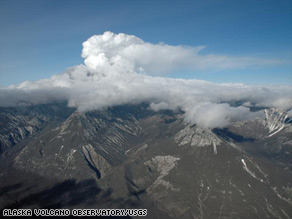
Anchorage Airport closed as volcanic ash falls

The Anchorage, Alaska, airport remained closed Sunday morning after an erupting volcano shot ash some 45,000 feet in the air on Saturday, officials said.

Ash from Mount Redoubt fell around the city -- Alaska's largest -- resulting in the closure of Ted Stevens Anchorage International Airport, the Federal Aviation Administration said.

Only a trace amount of the ash reached the airport grounds, airport spokesman Jeremy Lindseth said, but it was enough to affect operations. He said he did not know how many flights were canceled or rerouted as a result of the ash, and did not know when the airport would reopen.

The eruption occurred at about 1:30 p.m. (5:30 p.m. ET) Saturday, the U.S. Geological Survey told CNN. The volcano erupted four times on Friday, at times shooting ash 51,000 feet into the air.

The eruptions are the latest in a series that began March 22.

The Alaska Volcano Observatory has set the alert level at its highest possible designation -- red -- indicating that an eruption is under way or imminent and that the eruption will produce a "significant emission of volcanic ash into the atmosphere."

Friday's volcano activity prompted Alaska Airlines to limit flights to and from Anchorage, according to the airline's Web site. The airline canceled all its Thursday flights to and from Anchorage after an eruption earlier in the day sent an ash cloud 65,000 feet high

Brown snubbed over tax

GORDON BROWN’S carefully laid plans for a G20 deal on worldwide tax cuts have been scuppered by an eve-of-summit ambush by European leaders.

Angela Merkel, the German chancellor, last night led the assault on the prime minister’s “global new deal” for a $2 trillion-plus fiscal stimulus to end the recession.

“I will not let anyone tell me that we must spend more money,” she said.

The Spanish finance minister, Pedro Solbes, also dismissed new cash being pledged at Thursday’s London summit.

“In these conditions I and the rest of my colleagues from the eurozone believe there is no room for new fiscal stimulus plans,” he said.

Nicolas Sarkozy, the French president, has insisted that “radical reform” of capitalism is more important than tax cutting.

The attacks on Brown’s ambitions for the G20 to inject more money into the world economy come at the end of a week where the prime minister has travelled to three continents to build support for his proposals.

The likely deadlock at this week’s meeting will kill any remaining hope that Alistair Darling’s April 22 budget will offer significant tax cuts.

The assault by European Union leaders also represents a defeat for President Barack Obama, who is desperate for other big economies to copy his $800 billion stimulus plan.

“There will be a very long communiqué, but there won’t be much in it,” said a Washington economist.

Adding to the disarray, a draft of the agreement Brown hopes to secure was leaked to a German news magazine, prompting suggestions of “dirty tricks” by Berlin.

The draft stated that Britain wanted a “$2 trillion” global fiscal stimulus. However, the figure appeared only in brackets, indicating agreement on the package had yet to be reached.

The stimulus would boost world growth by 2% and employment by 19m, the draft said. The rest of the document was mainly general pledges.

“We believe that an open world economy, based on the principles of the market, effective regulation and strong global institutions, can ensure sustainable globalisation with rising well-being for all,” it said.

A No 10 source expressed “disappointment” at the leak and insisted the $2 trillion figure was not new money but an expression of the total tax and spending packages already pledged by G20 members.

Privately, government officials admit that no further fiscal stimulus will be announced this week, although there will be a $250 billion package for the International Monetary Fund to help rescue struggling poor nations.

Lord Mandelson, the business secretary, said he sympathised with the concerns of demonstrators planning to disrupt the London summit. “There is understandable frustration and some anger. The global economic systems has stalled and what we have got to do is get it started.”

George Osborne, the shadow chancellor, yesterday warned Brown against further tax cuts in the budget. “When it comes to your plans for a second fiscal stimulus, I say this Gordon Brown: enough is enough,” he said in a speech. “We will not let you play roulette with the public finances yet again.”

UK officials have not given up on the idea there could be agreement on a fresh boost for the world economy later in the year. “It is likely that there will be another heads of government meeting probably in Asia in the autumn,” said an official.

“This will be the forum where the next round of stimulus will be discussed.”

Brown still hopes to establish the IMF as an informal referee for international tax cuts. The plan is that the Washington-based body could advise on the timing of any future cuts.

Merkel’s criticism drew an angry response from Labour MPs. Denis MacShane, the former Europe minister, said: “Who does Mrs Merkel think is going to buy Mercedes and BMWs if she . . . says putting demand into the economy is a bad thing?” Another Labour MP said: “One has to ask who had something to gain from the leak of the communiqué. This feels like a dirty trick.”

There are growing fears that protests at the summit venue, the ExCeL centre in London’s Docklands could be marred by violence. Scotland Yard will be deploying specialist officers trained to use 50,000-volt Taser stun guns.